Private: Ikoseveta:
Artists
What's up

This week, producer Tim Cant, creator of two of our favorite Jungle-focused Palettes, gives a quick tour of how Jungle rose from late-’80s hardcore. From Amiga trackers and chopped breaks to ragga energy and today’s revival, here’s how it all snapped into place.
In the Beginning
In the aftermath of 1988’s Second Summer of Love, the tabloid headlines had subsided, but the UK’s youth culture was still hooked on the twin pleasures of illegal rave drugs and energetic dance music.
In the late 80s and early 90s British hip-hop, bleep, house and dancehall began to coalesce into a new form of music known as hardcore. This genre took the breakbeats of hip-hop and sped them up to house tempo – and beyond – combining them with heavy bass and musical influences from these other genres.
You can hear the influence of house, hip-hop and bleep in Some Justice by Urban Shakedown feat. Mickey Finn from 1991. This seminal track sampled the soulful house vocals of CeCe Rogers – Someday, chopped up the breaks from Run DMC’s Run’s House, and added heavy sub bass and sinister techno noises.
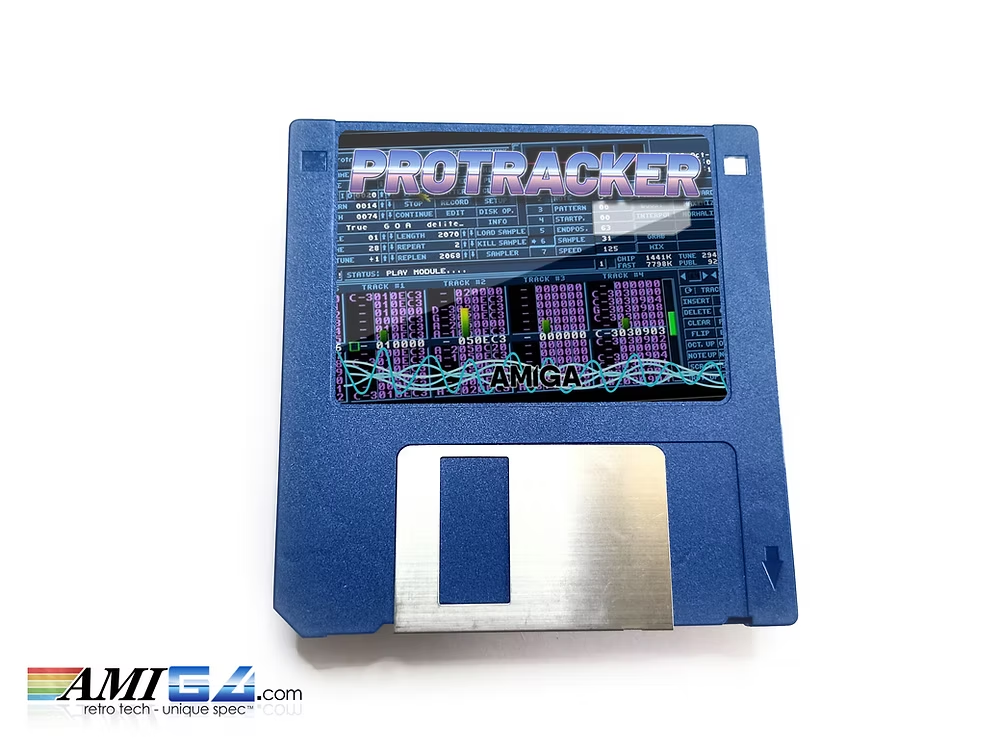
Urban Shakedown created their early tracks on a pair of Commodore Amiga home computers using tracker software, and while most early Jungle producers worked with a combination of computer-based sequencer and hardware sampler, the Amiga gave the opportunity for many noteworthy hardcore producers such as Foul Play, Omni Trio and DJ Red Alert & Mike Slammer a way to start making music with little more than a home computer.
The Evolution of Jungle
As hardcore evolved throughout the early 90s the breakbeat elements became more and more prominent, with well-known hip-hop breakbeats such as Amen, Think, Apache and Hot Pants twisted and processed into increasingly elaboration formations. This yet more breakbeat-focus style became commonly known as “Jungle”, and crossed over into mainstream success with tracks such as M-Beat feat. General Levy’s Incredible.
In the mid-90s Jungle was synonymous with ragga dancehall elements, but as the decade wore on, fashions changed and the music continued to evolve into what became known as drum ‘n’ bass, which tended to focus less on breakbeat mangling and arguably became more about strong grooves and atmospheric sounds.
However, in the 2010s drum ‘n’ bass artists such as Manix (AKA Marc Mac from 4hero) and Dead Man’s Chest (AKA Eveson) began to create new music in the hardcore/Jungle style, and by the time the 2020s lockdowns rolled around, the genre was ripe for revival.
Perhaps as a reaction to how far drum ‘n’ bass had moved from its original sound, the Jungle revival was seized on eagerly by both fans and artists alike. Contemporary Jungle music is made with a wide variety of tools, from the tracker-based work of Arcologies to the expansive studio sound of ASC.
About Tim Cant
Tim Cant is a prolific producer with a new ambient Jungle album launching next week! Preorder it here. Tim’s YouTube Channel is an excellent source of all things related to DnB and Jungle production. If you’d like to learn more about the history of Jungle, check out his videos A Beginner’s Guide to Jungle Breakbeats and Making Atmospheric DnB with Polyend Tracker+.
Check out his Jungle Bass Loops and Atmospheric Pads Palettes.
If you’d like to hear some of his music, please take a listen to some of his recent ambient Jungle or hardcore.


