Scene: User Friendly – Holistic Committee
Scene
What's up

Break Archive started as a conversation with Big Clack. We caught up with him to continue the conversation about his collection, how he rebuilt these breaks from scratch, and the role trackers play in his workflow.
I’m really excited about this sample pack. The seed for it started when we met in Portland, and you mentioned that you were “something of a breakbeat archivist.” I had to know more. Can you tell us a little about your breakbeat collection and how it came together?
Ah yes, Portland is where all the cool connections are made!
I started collecting vinyl when I got a job at a record and guitar store in my hometown. Being from Michigan, I went down a rabbit hole of Motown, funk, and soul music. I started looping breaks from vinyl to create jam tracks to play guitar and bass over. That was so much more fun to me than grabbing a generic jam track off YouTube or something similar. The energy of those recordings is just so much more musical. You can hear bleed from other mics in the studio, room sound, and sometimes fragments of other instruments in the breaks.
The first break I ever sampled was from Sly and the Family Stone’s “Sing a Simple Song.” There is a nasty break layered with saxophones that really caught my ear. As time went on, I got really into using Ableton. I started adding all of my break WAV files to my library. Ableton is a playground for processing, warping, and chopping breaks to create new patterns. This is when breakbeats really started taking over my life. I started diving into jungle, breakcore, and other genres that get really creative with layering breakbeats in their tracks. Breakbeats started becoming my instrument of choice. This encouraged me to keep digging and finding breaks that were less known but very useful for making my own music.
Sounds of the Break Archive:
That conversation eventually led to the Breakbeat Archive pack. My first reaction was selfish when I heard about your collection and workflow. I thought, “I need those breaks”. I think others find it as useful as I do, too. How did you approach creating the pack?
When I add a break to my library, I always convert it to MIDI data. This allows me to substitute other sounds in the break while keeping the overall groove of the track. This allowed me to recreate breaks from my library by replacing the samples one “chop” at a time. To be totally honest, I wasn’t sure how great the result would sound. Part of the magic of drum breaks is the original recording and all the interesting texture they can create.
Well, I think you knocked it out of the park! What went into recording, selecting, and preparing these breaks?
After recreating the pattern with new samples, I would then process them to fit the original sound as closely as possible. Sometimes that involved adding room sound, EQ, noise, saturation, or whatever effect I needed to get closer to the original recording. Once I did this with about ten of my breaks, I loaded them onto some of my samplers and trackers to see if they were useful. I was pleasantly surprised by these initial attempts. They weren’t 100% accurate recreations, but they were punchy and re-recorded using modern techniques. This made them very easy to drop into a library and start making music with right away. Most of Breakbeat Archive is made up of recreations of breaks from my library, but there are also a few original ideas that fit the overall concept of the palette.
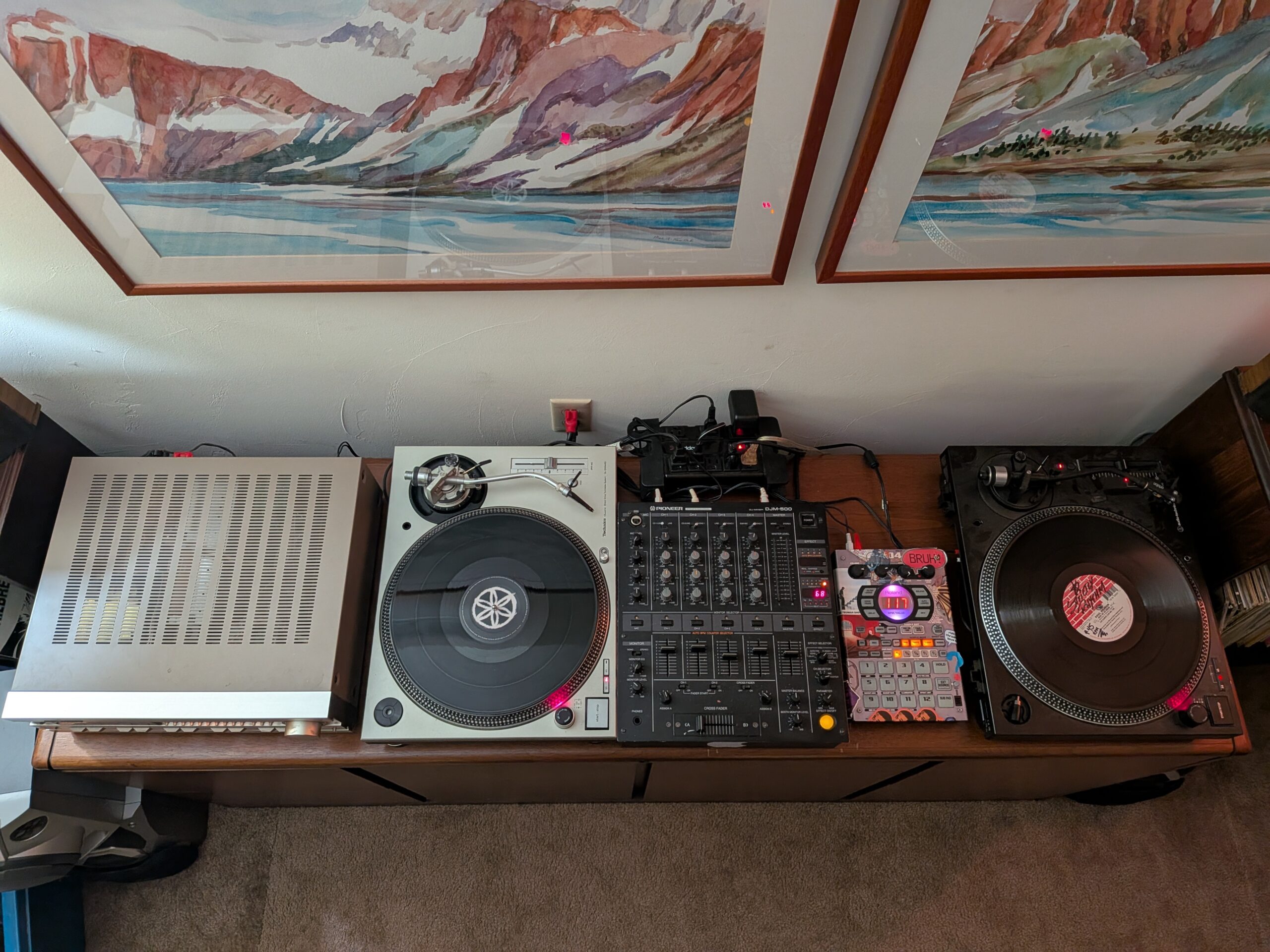
You also make music with Tracker. Can you walk us through your workflow and tell us a little about your own music and how breaks fit into it?
It is no mystery that tracking software is an amazing tool for processing and sequencing breakbeats. The Polyend Tracker allows you to do that on a standalone piece of hardware! So much early jungle and IDM music was sequenced using tracker software, like on the Amiga. Though some may say that workflow is archaic or boring, it is actually one of the greatest tools for sequencing breaks. Getting a set of chops on the grid and creating a simple pattern is always the first step. In most cases, simpler is better. Once I establish some sort of structure, I start messing with the FX lanes. Between ratcheting, micro-timing, and the fill function, I can get creative and start expanding the sequence. Randomization is also a great tool. Subtly randomizing pitch and velocity can make monotonous breaks come alive. Because all of this is value- and step-based, it is an incredible way to automate creatively. Don’t even get me started with tempo automation! You can get really neat, warped grooves that way. Then you go into Perform Mode and go wild. It’s just so much fun.
Given the size of your collection, I’m sure there were plenty of things you couldn’t fit into this pack. Is there anything you wanted to include but didn’t get to?
I definitely have a large number of breaks still sitting in my library. Plus, I am always searching for more. If musicians find them useful, I would be happy to offer more. I definitely have the workflow down now, so I would love to build upon it. Some breaks I just never use, and others didn’t make the cut because I wasn’t happy with my recreation. Some breaks are just too good to recreate—it almost feels sacrilegious, haha! Before working on another breakbeat pack, I would love to explore my only other big obsession: guitar pedals. Manufacturing guitar pedals is my day job, and that is a really good thing because I am obsessed with them. I might have more pedals than breakbeats! Vintage, weird, normal, and everything in between. I don’t just use them for guitar, either. I use them with synths, samplers, drums, vocals—everything. All audio deserves effects. I would love to make a collection of recordings using my effects collection. Some of the breaks in Breakbeat Archive were run through pedals as well!
Thanks for your time and for creating this pack! Check out Break Archive here.